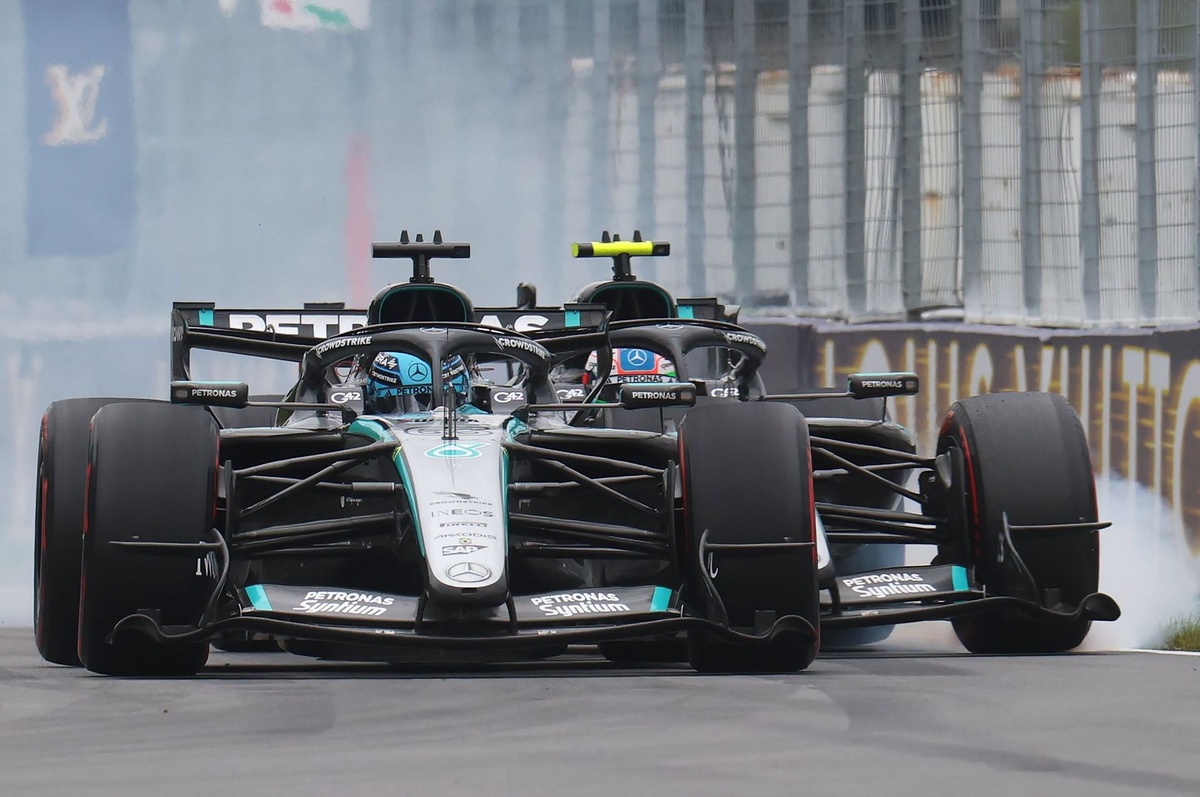
Why Mercedes F1 drivers resist team orders in title fight
The tension between team orders and driver ambition is as old as the sport itself, and the article's reach back to Collins and Fangio in 1956 underlines just how rarely this resolves cleanly — even in the so-called gentlemanly era. For Mercedes, the dynamic matters because both drivers evidently believe they have a legitimate shot, which makes any instruction to yield feel like a sporting injustice rather than a tactical tool. The historical framing is a reminder that no team has fully solved this problem; the leash metaphor signals that management knows it too. How a team navigates this without fracturing the garage is the real story, and history suggests it rarely goes smoothly.
Formula 1 drivers and team orders have a long and disagreeable history, especially when those drivers are in the heat of the world championship battle.<br>You have to go back to the 1950s to find a pr